
Okta, the identity company, has released a free online tool called the AI Blueprint. It asks one useful question: if you put AI agents to work in your business, can you see them, control what they reach and stop them when something goes wrong? This post walks through what the tool covers, what an Australian business can take from it, and where to be careful. It is general information, not security or legal advice.
What the AI Blueprint is
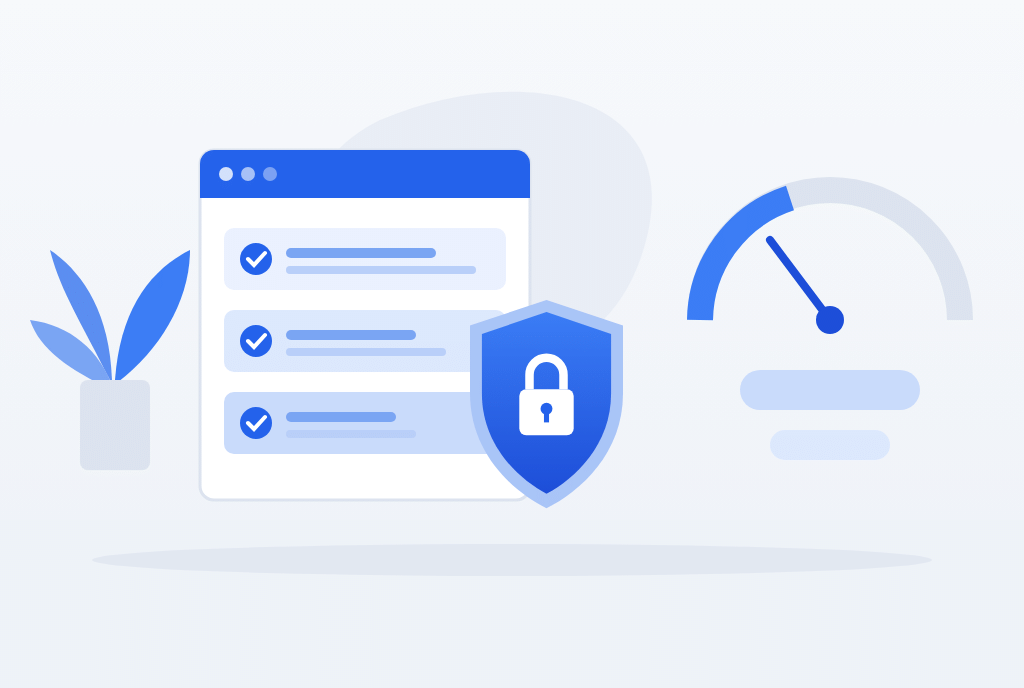
The Okta AI Blueprint is an interactive assessment titled “Assess your agentic security architecture”. You tick the controls you have in place. The tool then shows a “blast radius” meter, which rises as your agents gain access to more systems, and lets you run simulated attacks to see how far a compromise could spread.
An AI agent, in this context, is software that does not just answer questions. It takes actions: it reads your inbox, updates your CRM, books jobs, sends quotes or moves files. That is where the value is, and that is also where the risk is.
The three layers it checks
The tool splits agent security into three layers. They are a useful way to think about any AI system, whichever vendor you use.
1. Discovery: do you know which agents you have?
You cannot protect what you cannot see. The tool asks how you find agents, including ones built into the platforms you already use, browser extensions, tools on staff laptops and traffic on your network. It also flags “shadow AI”: agents your staff have switched on without anyone signing off.
For most small businesses, shadow AI is the real issue. A staff member connects an AI note-taker to the company calendar, or gives a browser assistant access to Gmail. Nobody else knows it is there.
2. Connections: what can each agent reach?
This layer lists what agents connect to: your SaaS apps, MCP servers (the plug-in standard many AI tools now use to reach other software), and other agents. It also covers identity standards for agents, such as an agent directory, single sign-on for agents and Cross App Access (XAA), an open standard Okta has been pushing so that one app can grant another app access through the company’s identity provider instead of through shared passwords.
The plain-English point: every connection you give an agent is another door. The more doors, the bigger the blast radius if the agent is tricked or its key is stolen.
3. Enforcement: can you control and stop it?
The last layer asks how you control what agents do once they are running. The tool lists an agent “kill switch”, security gateways that sit between agents and your systems, lifecycle management (so old agents are retired, not left running), human approval for sensitive steps and risk signals fed into your monitoring.
If you cannot answer “how would we switch this off in five minutes?”, you have found your first gap.
The attack simulator
The tool simulates three attacks against the setup you describe:
- Prompt injection. Hidden instructions in an email, web page or document tell the agent to do something you did not ask for.
- Credential theft. Someone steals the key or token the agent uses to log in to your systems.
- Lateral movement. Once inside one system, the attacker uses the agent’s access to hop into others.
We explain each of these in more detail in Prompt Injection, Stolen Keys and Lateral Movement: Three AI Agent Attacks Explained.
What an Australian business should take from it
The tool is built by an identity vendor, so its answers lean towards identity products. That is fine. The underlying questions still hold, and they line up with government advice. In May 2026, ASD’s Australian Cyber Security Centre and its partners in the US, UK, Canada and New Zealand published joint guidance, Careful Adoption of Agentic AI Services. It recommends giving each agent its own identity, least-privilege access, human oversight for high-impact or irreversible actions, continuous logging, and starting with low-risk tasks before expanding what agents can do.
So whether or not you ever buy Okta, the Blueprint’s three layers make a good self-check:
- List every agent. Include AI features inside tools you already pay for, and anything staff have connected themselves.
- List what each one can reach. Inbox, files, CRM, accounts, payments, customer records.
- Cut access to the minimum. Read-only where possible. One mailbox, not all of them. One folder, not the whole drive.
- Give each agent its own login. Never let an agent run on a staff member’s personal account or a shared admin password.
- Put a human on the risky steps. Payments, refunds, deletes, and anything sent to customers.
- Know how to switch it off. Write down who can revoke access, and how, before you need to.
Our guide Your AI Agents Need Their Own Logins turns this into a fuller checklist.
Where to be careful
- It is a vendor tool. The page makes no claims backed by data or method. Treat the score as a conversation starter, not an audit.
- It suits larger IT teams. Terms like gateways and OpenTelemetry assume an IT department. A five-person business can get most of the benefit from the six steps above.
- Privacy law still applies. If an agent makes or assists decisions that significantly affect people, the new automated decision rules may apply from 10 December 2026. See our guide to the December privacy deadline.
How Mantra Works builds AI agents
We build AI systems for Australian businesses with these controls in from day one: separate logins for each agent, the least access the job needs, human sign-off on anything that touches money or customers, logs you can read, and a clear way to switch it off. If you would like us to map the agents already running in your business, or build one safely, get in touch.
Sources
- AI Blueprint Tool: Assess your agentic security architecture, Okta, accessed 26 October 2026
- Careful Adoption of Agentic AI Services, ASD’s ACSC, CISA, NSA, Canadian Centre for Cyber Security, NCSC-NZ and NCSC-UK, 1 May 2026
- CISA and ASD’s ACSC publish joint guidance on securing agentic AI systems, A&O Shearman, 20 May 2026
- How to Build and List Secure Cross App Access (XAA) Connections on Okta Integration Network, Okta Developer, 6 July 2026